
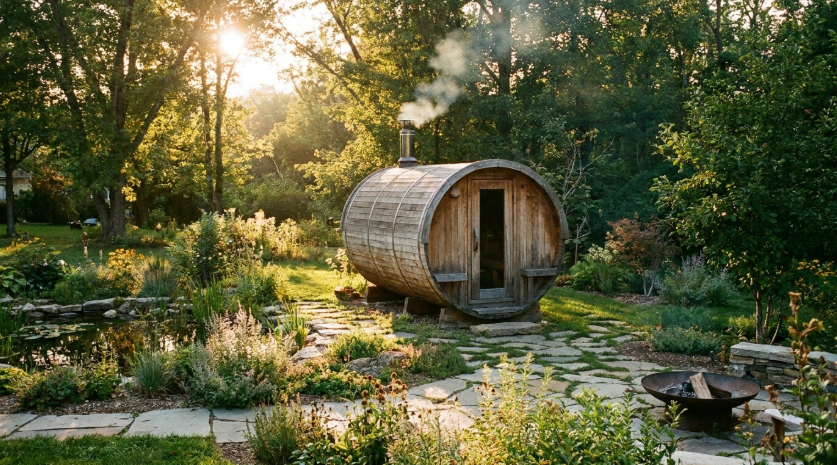
Running an electric barrel sauna three to four times a week typically adds $15 to $40 to a monthly electric bill, depending on local utility rates, session length, and how sheltered the unit sits from wind. A wood-fired barrel sauna trades that electric cost for firewood, generally $10 to $25 a month for the same usage, at the expense of a longer warm-up and more hands-on tending. Both numbers assume a properly insulated 6-foot-diameter barrel rather than a leaky, undersized enclosure.
What Actually Drives the Monthly Bill?
Three variables matter more than any spec sheet: heater wattage, how many sessions run per week, and how much wind the barrel sits in. A curved barrel shape sheds heat more evenly than a boxy cabin because there are no flat walls or square corners for cold air to pool against, but a barrel tucked into a small, fenced side yard still holds heat noticeably better than one sitting exposed on an open lot. Session length matters almost as much as frequency. A heater that runs for 45 minutes to reach 170 degrees Fahrenheit and holds there for a 60-minute session uses meaningfully less power than one left running for 90 minutes because the door kept opening.
How Much Does an Electric Barrel Sauna Cost to Run?
A 6-person barrel sauna in the 6-foot-diameter class commonly uses a 6 to 9 kilowatt electric heater. At a rough national average residential rate near $0.16 per kilowatt-hour, one hour of heating at 7 kilowatts costs a little over a dollar. Three sessions a week over a month lands most households between $15 and $30, and four to five sessions a week in a colder region can push that to $35 or $40. The math scales directly with local electricity prices, so a household paying $0.28 per kilowatt-hour in parts of the Northeast will land at the higher end even at the same usage as a household paying $0.12 in the Midwest.
What About a Wood-Fired Barrel Sauna?
A wood-fired heater swaps the electric bill for firewood, typically kiln-dried oak, birch, or ash burned in a small stove set into the barrel’s cradle or an adjoining anteroom. A single session burns roughly a third to half a cubic foot of split wood to reach and hold temperature, which puts monthly cost for three sessions a week somewhere between $10 and $25 depending on regional firewood prices. The tradeoff is time and attention: a wood stove needs 45 to 75 minutes to bring a barrel to temperature versus 30 to 45 for a comparable electric heater, and it needs periodic feeding during a long session rather than a single thermostat setting.
Does Placement in a Small Space Change the Numbers?
Yes, more than most buyers expect. A barrel sauna tucked against a garage wall or privacy fence, out of prevailing wind, holds its set temperature with less heater cycling than the same unit sitting in the open middle of a yard. Because the barrel shape has no flat broadside for wind to push against directly, a partially sheltered spot in a small lot can actually outperform an exposed placement on a much larger property. Elevating the barrel on its steel cradle or timber base a few inches off grade also helps, since it keeps cold ground moisture from working into the lower staves and forcing the heater to work harder in damp weather.
How to Keep the Monthly Number Down
A few habits cut the bill without any hardware changes. Preheating with the door shut rather than cracked, running sessions back to back for a household instead of one at a time, and adding a simple insulated cover over the roof vent between uses all reduce cycling. Buyers comparing barrel models before purchase can check heater wattage and interior cubic footage side by side on SweatDecks.com, since a heater sized correctly to the barrel’s volume from day one avoids the constant-cycling problem that drives up bills more than any placement choice. Finally, a thermometer inside the cabin, checked against the heater’s own display, catches a miscalibrated unit early, before months of overcompensating for a heater that reads low.
Does Your Electric Rate Plan Change the Math?
Not every utility bills electricity the same way, and a barrel sauna’s flexible schedule makes rate plans worth a second look. Time-of-use plans, common in states like California and parts of Texas, charge a lower rate overnight or in early morning hours and a much higher rate during a late afternoon peak window. Since a barrel sauna session can happen whenever the household wants rather than during a fixed workday, shifting sessions to an off-peak window can trim 20 to 40 percent off the per-session cost on a time-of-use plan without changing anything about the heater or the barrel itself. Checking whether your utility offers this kind of plan, and what the peak hours actually are, is a five-minute look at a bill that can meaningfully change the monthly number calculated above.
Household size and how many people use the barrel also matters less for cost than people assume, since the heater runs the same regardless of whether one person or six are inside. A family sharing sessions back to back, rather than each member running a separate session later in the evening, gets more use out of each heating cycle and keeps the monthly total closer to the low end of the range rather than the high end.
How Does This Compare to an Indoor Sauna Room?
An indoor sauna room built into a basement or spare bathroom often costs more to run than an equivalent outdoor barrel, mostly because the surrounding house air conditions itself around it, which sounds efficient but actually means the heater fights climate-controlled air rather than settling into the outdoor temperature swing a barrel adapts to naturally. An indoor build also usually means a larger, boxier space with corners and a flat ceiling, both of which lose heat differently than a curved barrel roof. None of this makes an indoor room a bad choice, but it does mean the monthly numbers above do not transfer directly if you are weighing a barrel against a built-in room rather than against nothing at all.
Frequently Asked Questions
How much does an electric barrel sauna cost per month? For three to four sessions a week at a national average electric rate, a 6 kilowatt heater typically adds $15 to $35 to the monthly bill. Colder climates and longer sessions push that toward $45.
Is a wood-fired barrel sauna cheaper to run than electric? Per session it often is, since firewood generally costs less than the equivalent electricity. The tradeoff is a longer warm-up and more hands-on tending during the session.
Does a barrel sauna cost more to run in a small yard? A wind-sheltered spot against a fence or wall usually heats more efficiently than an exposed corner of a larger lot. Placement affects the bill more than available square footage does.
What size heater does a 6-person barrel sauna need? Most units in the 6 to 7 foot diameter range use a 6 to 9 kilowatt heater, sized to interior cubic footage rather than the footprint on the ground.
References
- Cardiovascular and Other Health Benefits of Sauna Bathing: A Review of the Evidence, Mayo Clinic Proceedings, 2018
- Clinical Effects of Regular Dry Sauna Bathing: A Systematic Review, Evidence-Based Complementary and Alternative Medicine, 2018
- Benefits and risks of sauna bathing, The American Journal of Medicine, 2001
By Megan Hollis

