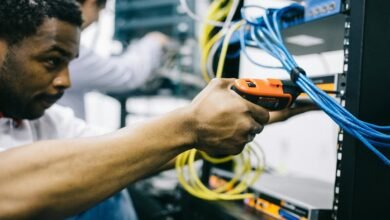
The Secure Call Monitoring Intelligence Defense Agency operates at the intersection of national security and individual privacy. Its use of key identifiers—such as 3517997122 and 3206235693—highlights the agency’s commitment to identifying potential threats. However, this practice raises critical questions about ethical implications and the balance between surveillance and personal freedoms. As methodologies evolve, the ongoing discourse surrounding privacy rights becomes increasingly vital. What measures will be necessary to ensure accountability?
Understanding Secure Call Monitoring
Although secure call monitoring may seem straightforward, it encompasses a complex interplay of technologies and protocols designed to ensure the confidentiality and integrity of communications.
Central to this process is call encryption, which safeguards conversations from unauthorized access.
However, privacy concerns arise as monitoring practices can conflict with individual freedoms, necessitating a careful balance between security measures and the right to private communication.
Key Identifiers and Their Significance
The effectiveness of secure call monitoring is heavily reliant on key identifiers that facilitate the accurate tracking and management of communications.
Through identifier analysis, agencies can discern patterns and prioritize threats.
The significance assessment of these identifiers not only enhances operational efficiency but also contributes to informed decision-making, ultimately safeguarding individual freedoms while ensuring national security objectives are met.
Methodologies Employed by the Agency
Employing a range of methodologies, the agency leverages advanced technologies and analytical frameworks to optimize secure call monitoring processes.
By integrating sophisticated monitoring techniques with robust intelligence strategies, it enhances situational awareness and response capabilities.
These approaches ensure effective data collection and analysis, enabling the agency to identify potential threats while maintaining a commitment to operational security and the protection of civil liberties.
Future Implications for Secure Communications
As secure call monitoring methodologies evolve, the implications for secure communications become increasingly significant.
Future technologies promise enhanced encryption and privacy measures, yet they also raise substantial privacy concerns.
The balance between security and individual freedom will dictate the landscape of secure communications, necessitating ongoing dialogue about the ethical deployment of monitoring systems while safeguarding citizens’ rights to privacy in an interconnected world.
Conclusion
In conclusion, the Secure Call Monitoring Intelligence Defense Agency exemplifies the delicate balance between national security and individual privacy rights. As the adage goes, “With great power comes great responsibility.” The agency’s use of key identifiers and advanced methodologies underscores the importance of ethical considerations in monitoring practices. As technology evolves, ongoing dialogue will be essential to maintain public trust and ensure that the principles of transparency and accountability remain at the forefront of secure communications.